
Location: Jaipur |Date: November 24, 2025 |Read Time: 3 minutes
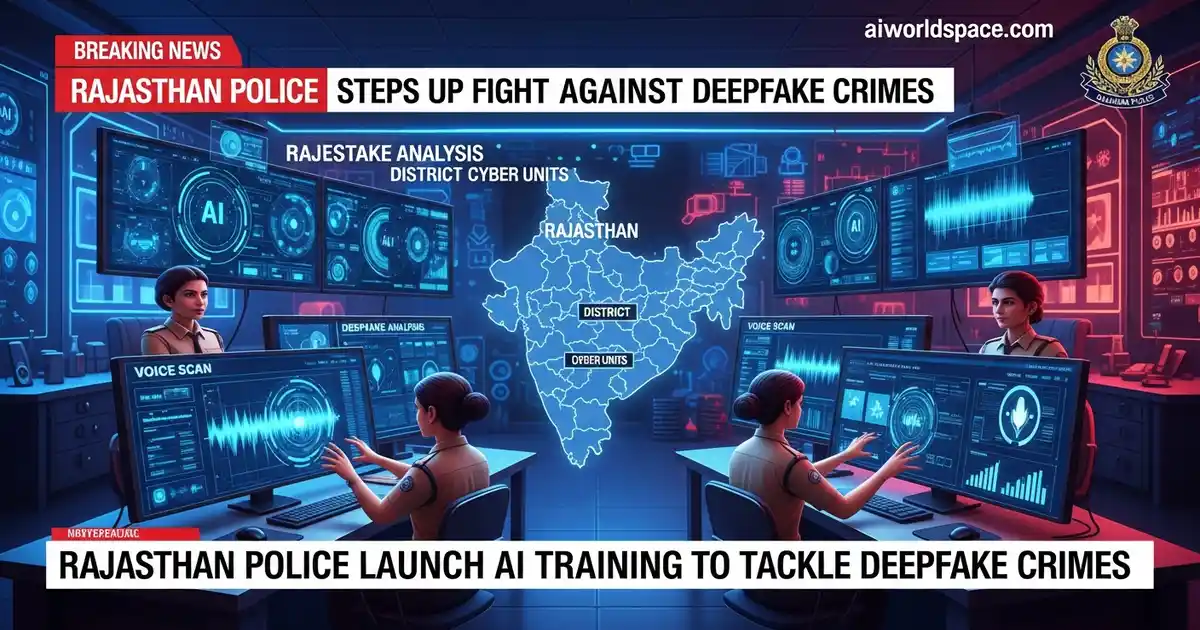
Rajasthan Police has begun specialised AI training to counter deepfake videos and voice-cloning scams. Officers, journalists and cyber teams are learning how to detect forged digital content and strengthen cyber investigation across districts.
Deepfakes and voice cloning are emerging as major threats in India’s cybercrime landscape. Fake videos and synthetic audio clips have already appeared in several cases, misleading citizens and complicating investigations. With these risks rising, Rajasthan Police has launched a new AI-driven training programme aimed at preparing officers to identify, verify and respond to digital forgeries quickly.
Also read:-

Is Rajasthan Police Now Using AI to Stay Ahead of Deepfake and Voice-Cloning Threats?
According to the report, police officers are being trained to spot early signs of manipulated content. They are learning how deepfake audio differs from real speech patterns, and how video frames, lighting, and lip-sync errors reveal tampering. The objective is simple — detect suspicious clips before they spread or cause harm.
Also read

Training to Identify Fake Videos and Synthetic Audio
The programme includes real case examples, recent cyber fraud incidents, and hands-on analysis sessions. Officers are being taught a step-by-step process to examine any clip before treating it as evidence. This is crucial, as many people accept viral videos as genuine without verification.
Strengthening Digital Forensics in Every District
Rajasthan’s cyber units across districts are being prepared to use advanced digital forensic tools. These systems can quickly scan a video or audio file and flag possible manipulation. With stronger district-level capability, investigations can move faster and remain less dependent on external labs.
Also read:

Workshops Held with ISB to Train Journalists and Officials
The police also partnered with the Indian School of Business (ISB) for a detailed workshop. Journalists, media staff and officials were trained on how misinformation is created and how deepfake content spreads. The goal was to build joint awareness so that both media and police can respond quickly to fake digital content.
Could AI-Based Modules Become Part of Future Policing
Discussions in the training highlighted future tools like automated verification systems, AI-driven analysis dashboards and virtual investigation support. These ideas are in early stages, but officers believe such tools could make digital crime tracking more efficient over time.
How This Training Helps Counter New Cybercrime Tactics
Criminals are now using high-end AI to run scams, spread rumours and clone voices for fraud. With this training, police teams can recognise these patterns early and act before the crime escalates. Faster detection means quicker responses and fewer victims.
Also read

Risks and Challenges as AI Tools Expand
The rise of deepfakes also brings new risks. Manipulated videos can trigger panic, harm reputations, or influence public opinion. This is why the training also focuses on responsible use, verification protocols and the need for controlled deployment of AI tools.
Conclusion
Rajasthan Police’s AI training marks an important shift in digital security preparedness. The next steps include expanding forensic capacity, building specialised district teams and creating faster verification systems for suspicious content. The coming months will show how effectively this training reduces deepfake-related crime and strengthens cyber policing in the state.