Nagpur | Date: July 29, 2025 | Read Time: 3 min
Summary: Last Thursday morning, I drove forty minutes from Nagpur city to a village most GPS systems don’t recognize. Waddhamna isn’t the kind of place that usually makes news. Dusty roads, scattered houses, the usual chai shop where uncles argue about cricket scores. Except now it’s famous for something completely unexpected.
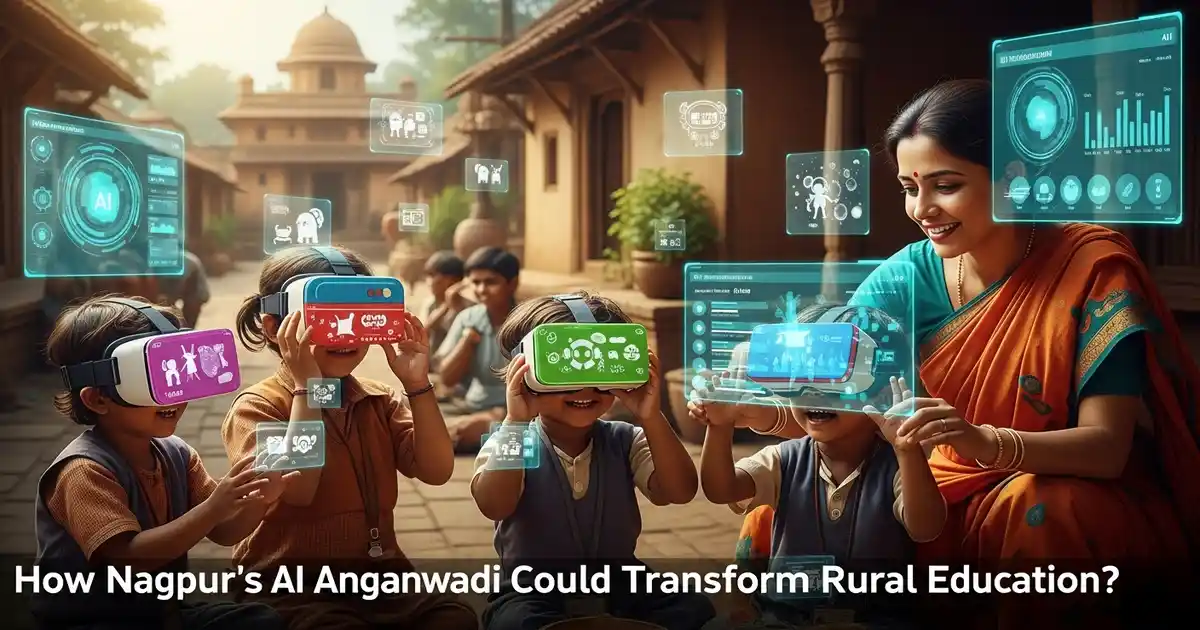
The Anganwadi building looked ordinary from outside. Same concrete walls, same faded government signboard. But step inside and everything changes. Little Pooja, maybe four years old, was wearing these chunky VR goggles and laughing at something only she could see. Her friend Rahul kept trying to catch animated butterflies floating in mid air.
Article हिंदी में पढ़े: नागपुर के छोटे गांव ने कैसे बनाया भारत का पहला AI आंगनबाड़ी केंद्रWhat I Saw There Blew My Mind
My first thought? This can’t be real. Rural Maharashtra kids don’t usually get access to technology that most urban schools still can’t afford. But Sunita Madam, who runs this center, explained how the Nagpur Zilla Parishad somehow managed to pull this off without breaking their usual shoestring budget.
“Initially, I was terrified,” she admitted, stirring tea in the corner room. “What if the children break these expensive gadgets? What if parents complain?” Three months later, attendance has doubled. Parents walk longer distances just to bring their kids here.
AI powered Anganwadi India: The Numbers Don’t Lie
The setup costs roughly ₹2,800 per child annually. Compare that to private nursery fees in Nagpur city, which easily cross ₹15,000. The AI dashboard tracks individual progress automatically. Pooja learns colors faster through games. Rahul struggles with shapes but excels at number recognition. The system adapts accordingly.
What struck me most was how naturally these kids adapted. No instruction manual needed. Four year old hands figured out virtual interfaces faster than I could.
Rural education AI: Beyond the Hype
Will this actually improve educational outcomes long term? Too early to say. But watching previously shy children confidently engage with learning activities suggests something significant is happening here.
Other villages are already demanding similar setups. The collector’s office receives daily calls asking when “our turn” will come. Maharashtra’s rural development minister visited last week and left impressed.
Smart Anganwadi Technology :The Bigger Picture
Anganwadis have operated basically unchanged since my mother’s generation. Same steel plates for mid day meals, same hand drawn charts on walls, same limited resources. Waddhamna proves innovation doesn’t require Mumbai budgets or Bangalore expertise.
Sometimes good ideas emerge from unexpected places. A small village nobody heard of yesterday might just have shown India’s 14 lakh Anganwadi centers what tomorrow could look like. Whether others follow remains to be seen, but the precedent is set.
Also Read:

AI Revolution in Farming? Gadkari’s Vidarbha ModelMight Shock Everyone
NagpurAI #SmartAnganwadi #RuralEducation #AIInnovation #DigitalIndia #ChildWelfare #GrassrootsTech #RuralTech #EducationTech #CommunityImpact