Location: Delhi |Date: October 25, 2025 |Read Time: 3 minutes
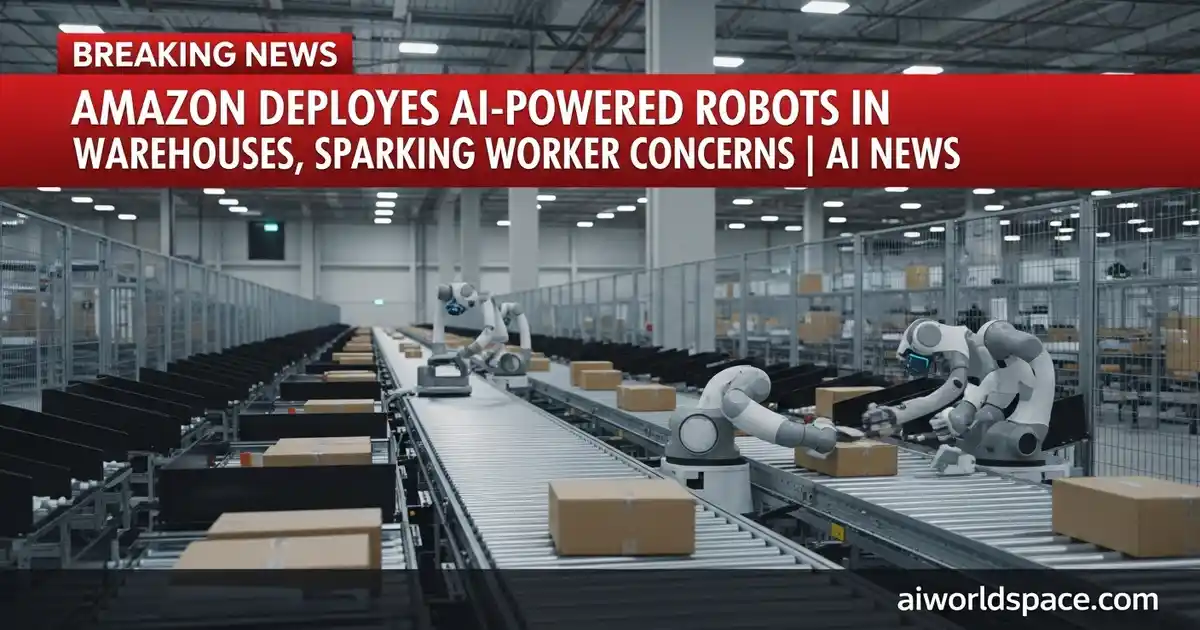
News Brief : Amazon is deploying advanced AI to make its warehouse robots smarter and safer. With over 750,000 robots already in operation, the tech giant is using machine learning and computer vision to speed up order handling and improve worker safety. Experts say the move could boost warehouse productivity globally, with India’s fast-growing logistics sector also set to benefit.
Amazon on Wednesday revealed a major push into warehouse automation, using artificial intelligence (AI) to make its robots smarter and faster—and this shift is stirring debate about the future of human warehouse jobs.
The new robot model dubbed “Blue Jay”, being trialled in South Carolina, is one of the key innovations. Amazon says Blue Jay can pick, sort and consolidate items at a single workstation—tasks previously handled by several machines or multiple human workers.

The new system follows the earlier robot “Vulcan”, introduced earlier this year and described by Amazon as having a “sense of touch”.
Amazon’s chief technologist for robotics, Tye Brady, stated that thanks to AI, Amazon cut the time to design, build and deploy Blue Jay by roughly two-thirds compared with previous cycles. “That’s the power of AI,” he said.
While Amazon insisted the aim is to empower human workers—making their jobs safer and more “smart”—some external estimates raise concerns. A report by The New York Times suggested that this wave of automation could allow Amazon to avoid hiring up to 160,000 workers over the next two years.
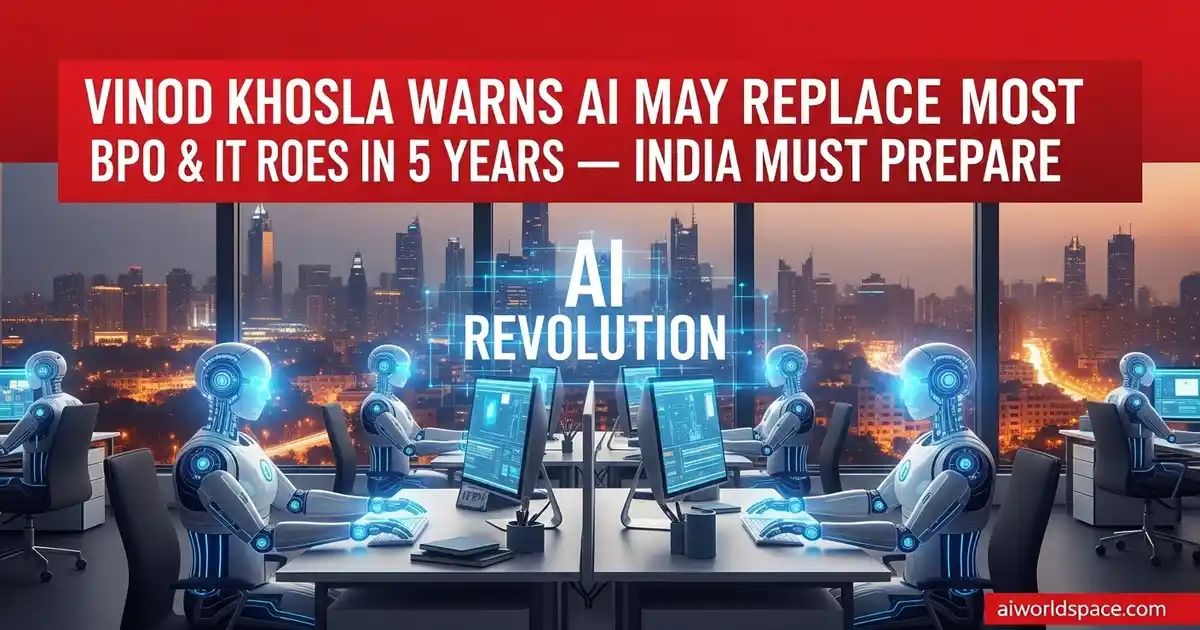
Venture capitalist Vinod Khosla has warned that in the next five years, artificial intelligence could replace most roles in India’s IT and BPO sectors. Alongside risks, he sees huge opportunity for India to lead AI innovation if it adapts quickly.
legendary Venture Capitalist Vinod Khosla Predicts Major Disruption: AI to Replace Most BPO & IT Roles in 5 Years
The company also showed an AI agent designed to manage the robot fleet and warehouse workflow in real-time, and smart glasses that give delivery drivers directions and navigational help.
These moves signal Amazon’s ambition to build a “warehouse of the future” — one where machines and humans co-exist but machines take on more complex or repetitive tasks.
What this means for Indian audiences: As global leaders such as Amazon ramp up warehouse AI, similar technologies may make their way to India’s logistics hubs and e-commerce centres. The shifting role of human workers—from manual picking to monitoring robots or managing flows could change job profiles in logistics and warehousing.
In sum, Amazon’s new AI-robot drive promises faster order fulfilment and smarter operations—but also raises real questions on workforce transition, job roles and how workforces adapt to a more automated future.
Also Read-