Location: New Delhi, India |Date: October 11, 2025
Read Time: 3 minutes
Summary:
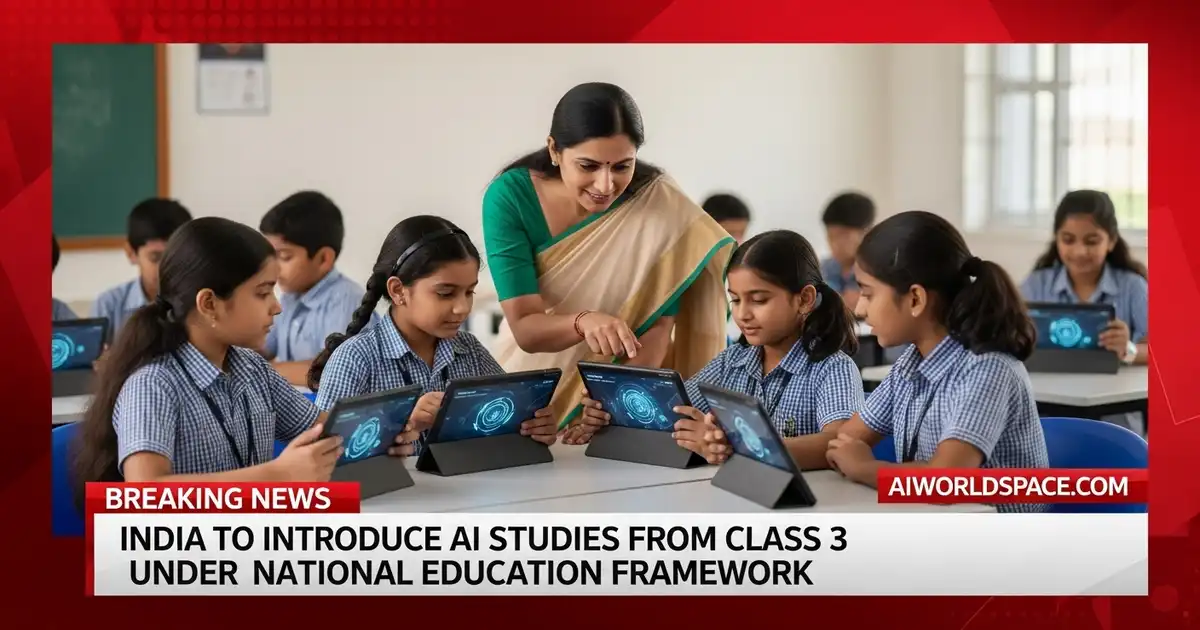
India is preparing to introduce Artificial Intelligence (AI) education from as early as Class 3, marking a historic shift in the country’s academic structure. The move, part of a national AI education framework under development, aims to familiarise children with technology-driven learning from a young age and build a digitally skilled generation.
Early Start for a Tech-Driven Generation
The central government is working on a new educational framework that will integrate Artificial Intelligence as a part of the school curriculum starting from Class 3.
The goal is to make students comfortable with digital technologies early on and nurture their ability to think critically and creatively in a world increasingly influenced by AI.
Officials from the Ministry of Education have indicated that the idea is not just to teach coding or robotics, but to help children understand how AI functions, how it impacts daily life, and how it can be used responsibly. This shift aligns with the National Education Policy (NEP) 2020, which emphasizes experiential learning and the use of advanced technology in classrooms.
Summary:
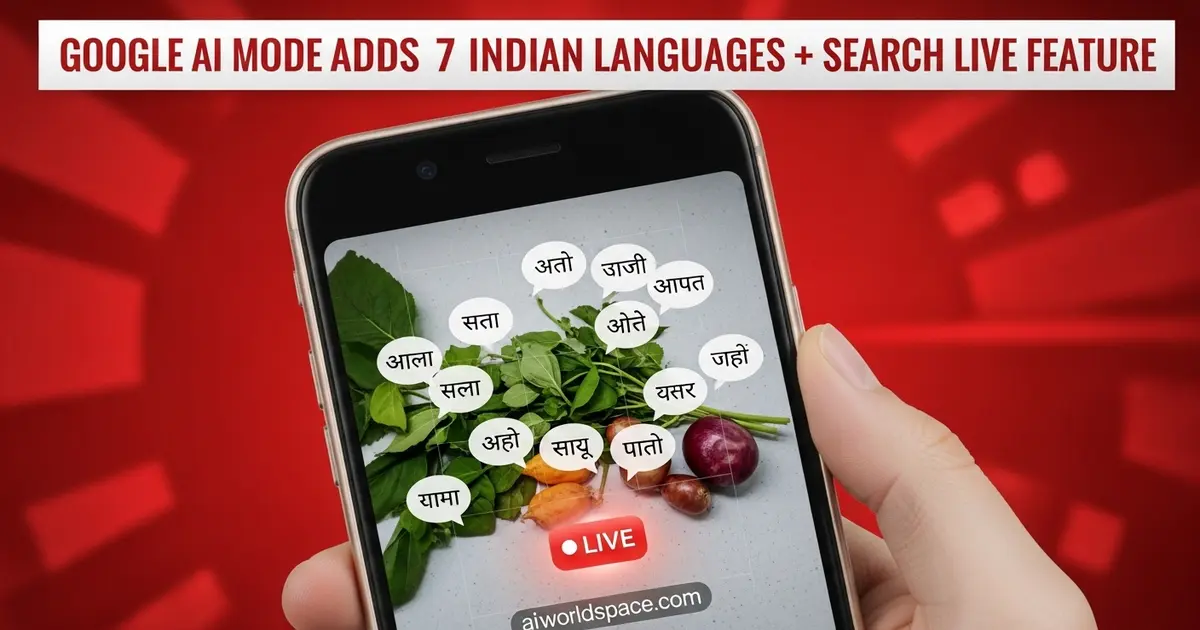
Google has just expanded its AI Search Mode in India by adding support for seven new Indian languages and launching Search Live — a feature that lets users use voice commands and even camera input for real-time search assistance.
Google Brings ‘Search Live’ & New Languages to AI Mode — What’s Changing?
What Will the AI Curriculum Include?
The new framework will define age-appropriate content for different levels. At the primary stage, students will learn through simple games and visual activities that demonstrate how AI systems think and learn.
As they advance, the curriculum will introduce topics such as data patterns, machine learning basics, and ethical AI use.
The initiative aims to make learning more interactive, encouraging students to explore real-world applications of AI like chatbots, smart assistants, and AI art tools—without overwhelming them with technical complexity.
Summary:
Prime Minister Narendra Modi recently met Qualcomm CEO Cristiano Amon in New Delhi to discuss India’s growing capabilities in artificial intelligence (AI), semiconductor design, and innovation-led manufacturing. The meeting underscored India’s ambition to become a global centre for next-generation technology.
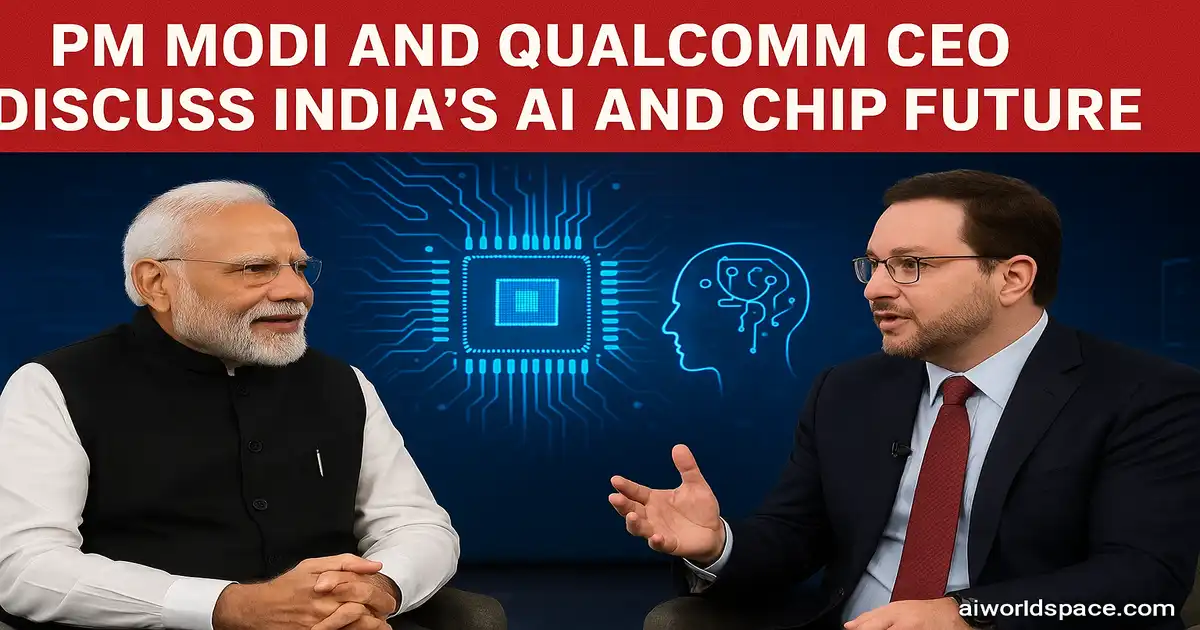
PM Modi Meets Qualcomm Chief, Discusses India’s AI and Chip Revolution
Preparing Teachers and Building Infrastructure
To implement the AI curriculum effectively, the government plans to launch a nationwide teacher training programme. Educators will be introduced to AI concepts and classroom tools that simplify teaching complex ideas.
The plan also includes establishing AI labs in schools, equipped with computers, smart boards, and learning kits that allow students to experiment with AI in a guided environment.
School administrators are being urged to invest in digital infrastructure to ensure that even government and rural schools can access AI-based learning resources.
Summary:
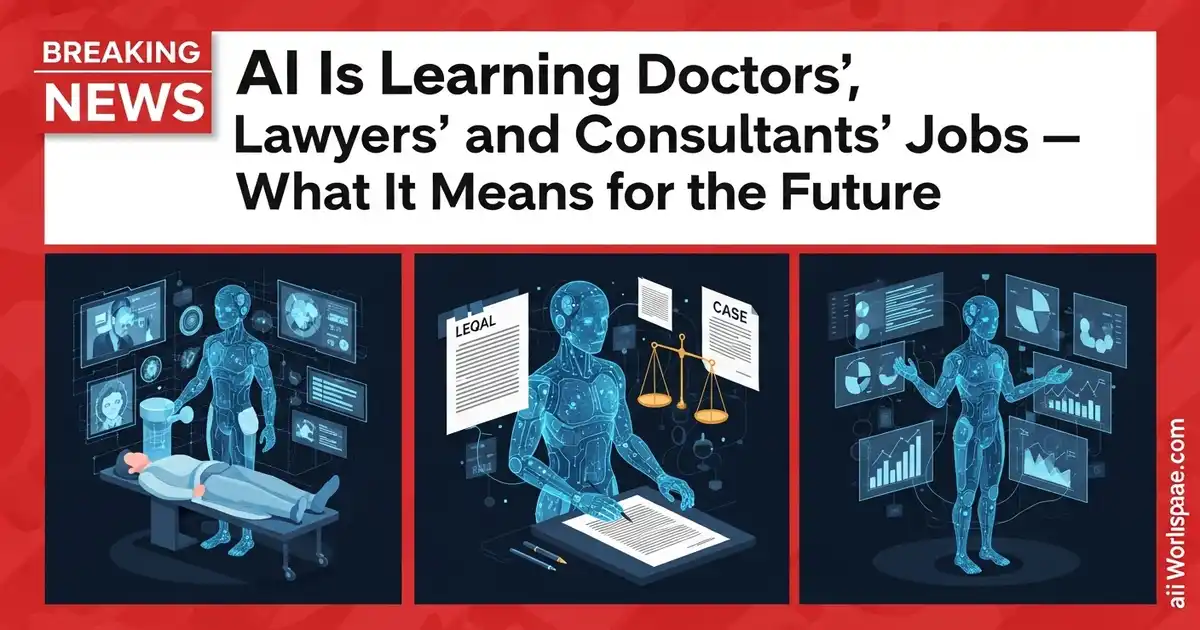
Artificial Intelligence is rapidly expanding beyond coding and chatbots into fields once thought untouchable — medicine, law, and corporate consulting. From drafting legal briefs to diagnosing rare illnesses, AI is challenging the expertise of highly paid professionals, raising new questions about the future of work.
Is AI Quietly Replacing Doctors, Lawyers and Consultants? A Future Already Unfolding
Why This Matters for India’s Future
By integrating AI from an early age, India aims to build a foundation for a generation that can adapt to emerging technologies instead of being left behind. The global job market is rapidly changing, and skills related to AI, automation, and data science are becoming essential.
This initiative could position India as a global leader in AI education, producing a workforce ready for the 21st-century digital economy.
Experts see this as a strategic step not only in education but also in national competitiveness. Countries like China and Singapore have already introduced AI education early on, and India’s move reflects its intent to stay ahead in technological innovation.
Summary:
OpenAI has unveiled Sora 2, a revamped AI video creation app that competes directly with Google’s Banana tool and Meta’s recently announced Vibe. With features like auto-scene generation, voice dubbing, and creative templates, Sora 2 signals OpenAI’s bid to dominate the multimedia AI space.
OpenAI Launches Sora 2: Aiming to Rule the AI Video Market, Eyes Google Banana & Meta Vibe
The Vision Beyond the Classroom
Beyond academics, this framework represents a cultural shift one that places innovation, problem-solving, and digital awareness at the core of education.
The government envisions an ecosystem where children grow up as informed users and creators of technology, capable of using AI for social good and sustainable development.
If implemented successfully, this could redefine how India’s future workforce learns, thinks, and innovates transforming classrooms into the breeding grounds of the next generation of AI pioneers.