Raipur, Chhattisgarh| Saturday, 05 August 2025|4 minutes
Summary-
A group of young engineering students from Raipur’s Government Engineering College has surprised the global tech community with an invention that tracks whales through satellites. Their system studies years of ocean data and learns from it to guide ships away from whale zones. If adopted widely, it could make the seas safer and transform the way marine life is monitored
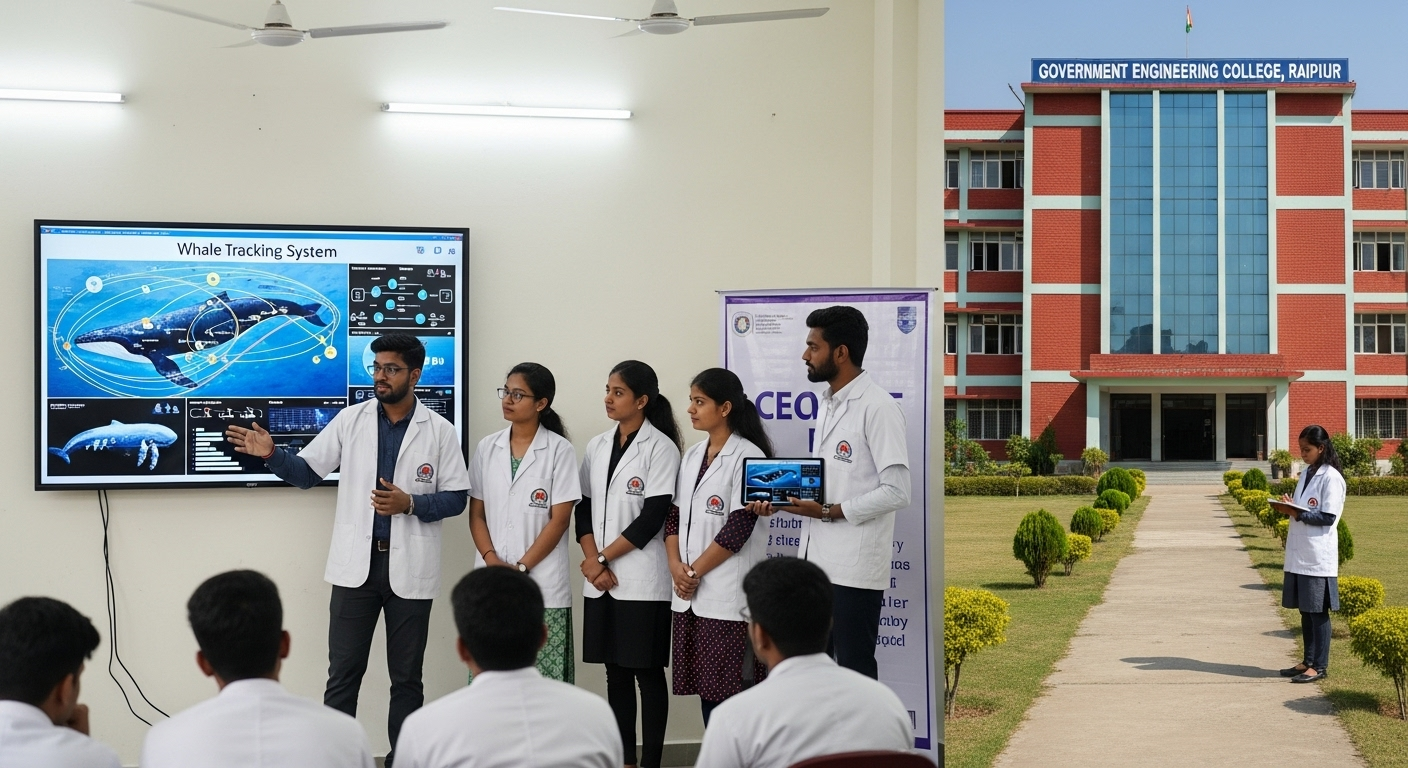
Raipur is in the spotlight worldwide after students from the “Government Engineering College (GEC), Raipur” came up with AI System to Track Whales ,That is a system that can track whales in real time using satellite images.
The project blends modern mapping and data techniques to make seas safer for both ships and whales.
What makes this effort stand out is that it doesn’t just follow whale movements , it also gives clues about their age, health, and migration paths.
How Raipur Students Made This Project Stand Out
For years, collisions between huge ships and whales have worried scientists and conservationists alike. Now, the students in Raipur believe they’ve found a way to tackle it. By studying more than five years of satellite records, they built software that spots danger zones where whales are most at risk.
The system can alert ships to steer clear, protecting marine life while keeping journeys safer for everyone at sea.
Project supervisor Dr. R.H. Talwekar explained: “Our system processes ocean-surface images, identifies whale species and numbers, and even provides key health indicators.”
AI System to Track Whales: Recognition Beyond Borders
The innovation is already making waves internationally. The project was selected in the IEEE’s Fourth Student Grand Challenge, where it received a grant of $8,000. The team is set to present its work in Brisbane, Australia, this August, marking India’s presence on the global marine technology map.
Competing with projects from China, Colombia, Indonesia, and India, the Raipur entry was ranked as the most impact
AI System to Track Whales: Eighteen Months of Dedication
It took the Raipur team a year and a half of steady work packed with reviews, testing, and countless late nights to bring their whale‑tracking system to life. Ten students joined forces, blending image processing with smart data learning so the system keeps improving the more it’s used.
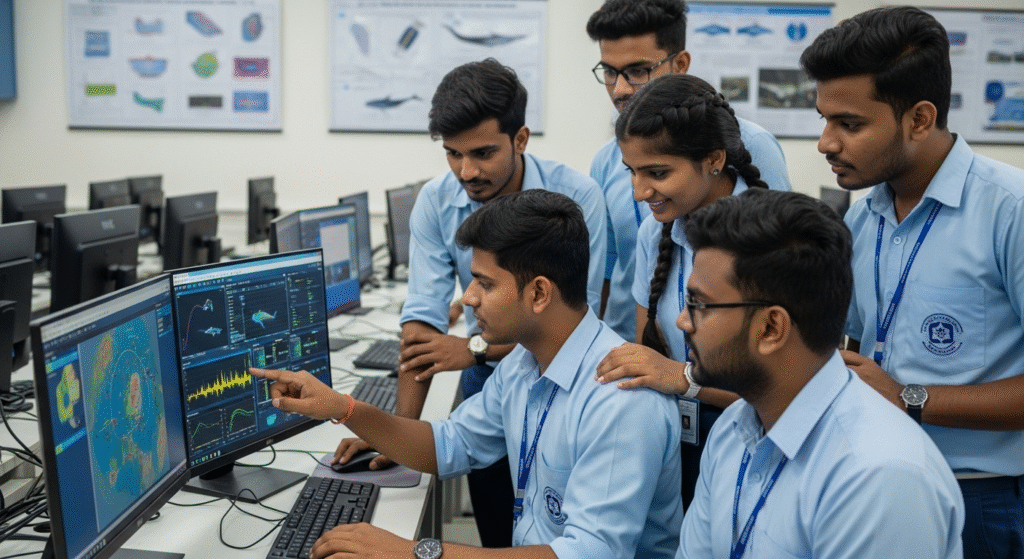
If it takes off, the technology could change the way the world looks after whales, monitor the health of oceans, study climate patterns, and even make fishing routes safer across the globe.
Why This AI System to Track Whales Matters for India and the World
Experts say the Raipur project could become a global reference point for how technology can help protect marine life. But it’s about more than just smart tools , it shows how India’s young minds are stepping up with real solutions to some of the world’s toughest problems.
For the country, it’s a proud moment. It proves that groundbreaking ideas don’t always come from giant tech hubs sometimes, they’re born in classrooms of cities like Raipur.
Also Read:

India to Host AI Impact Summit 2026: Can the Country Lead the Global AI Race?